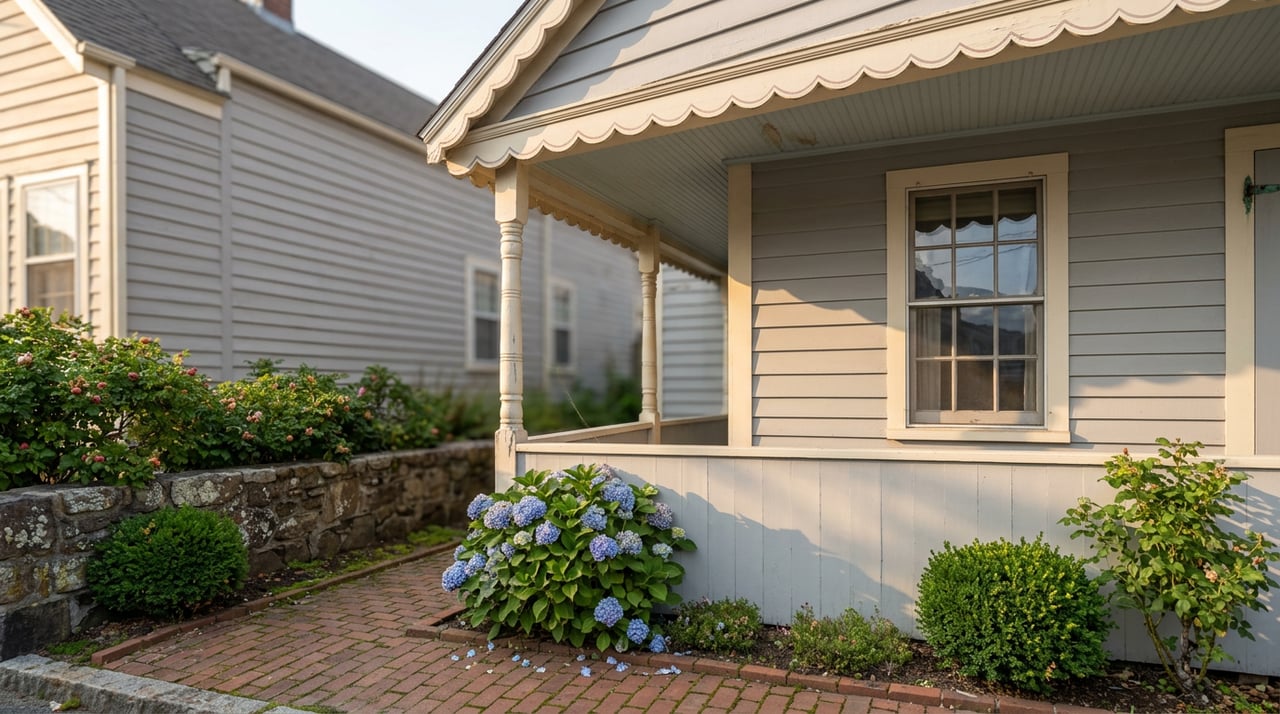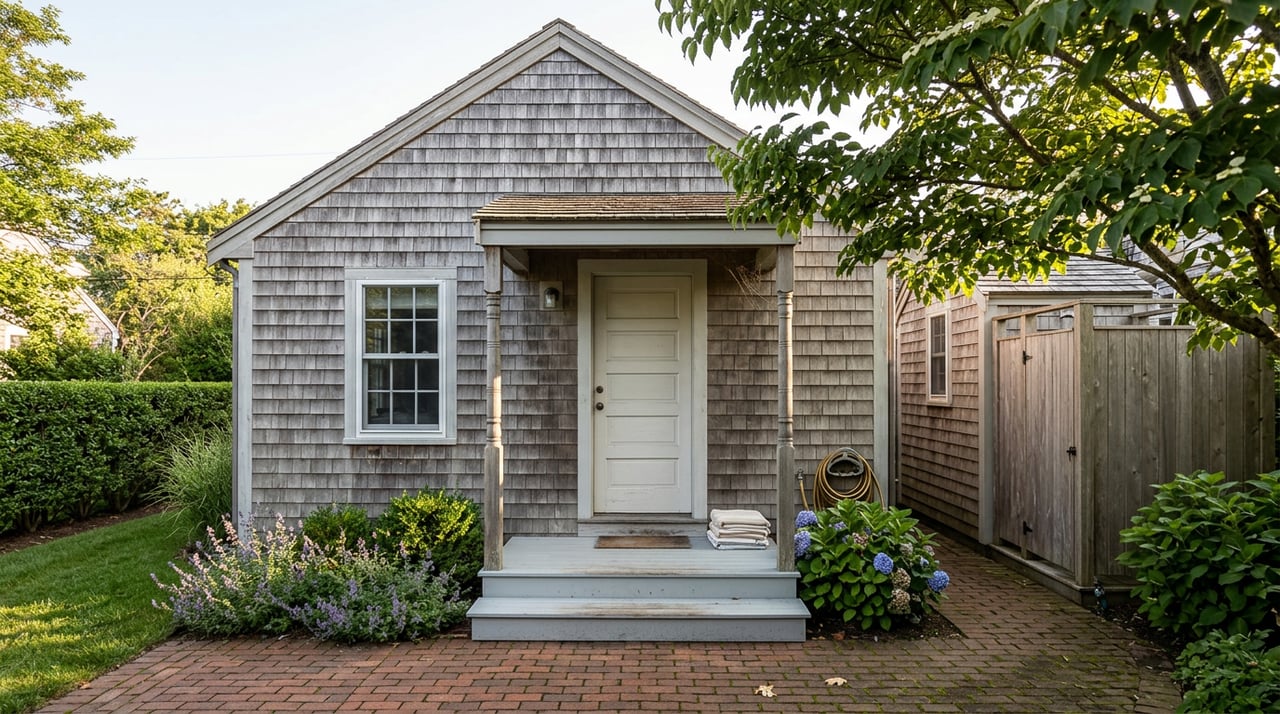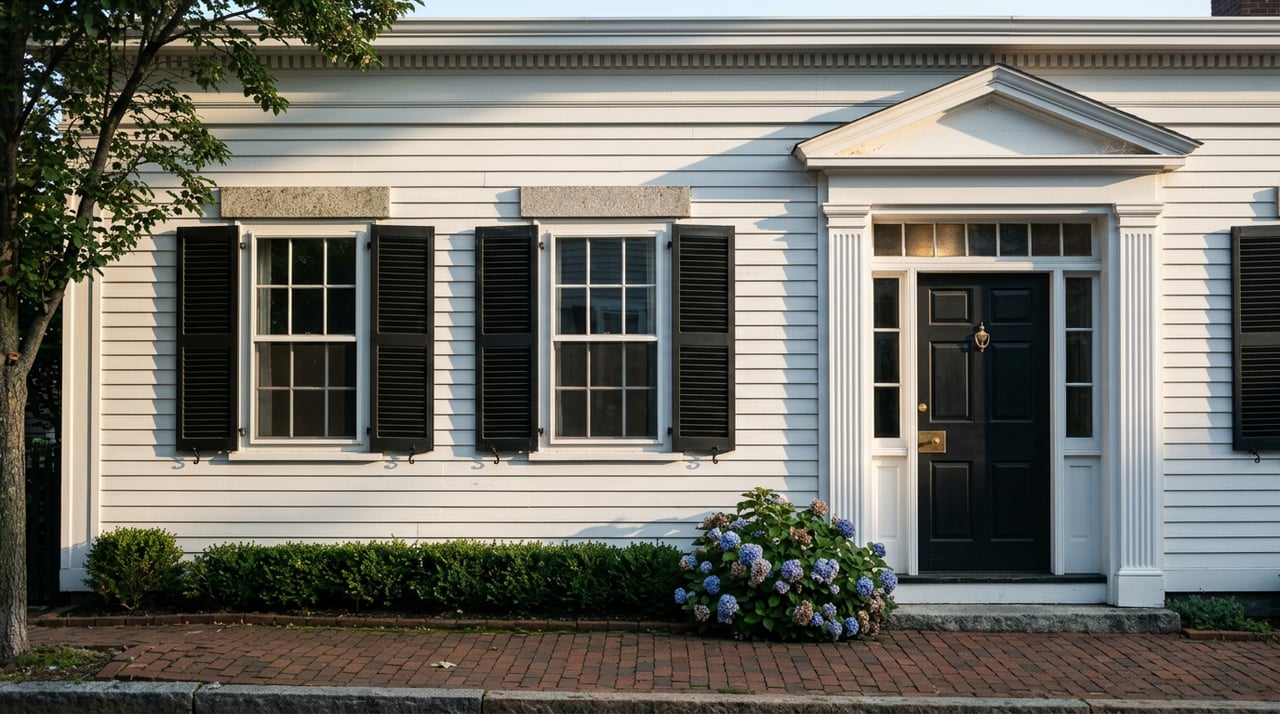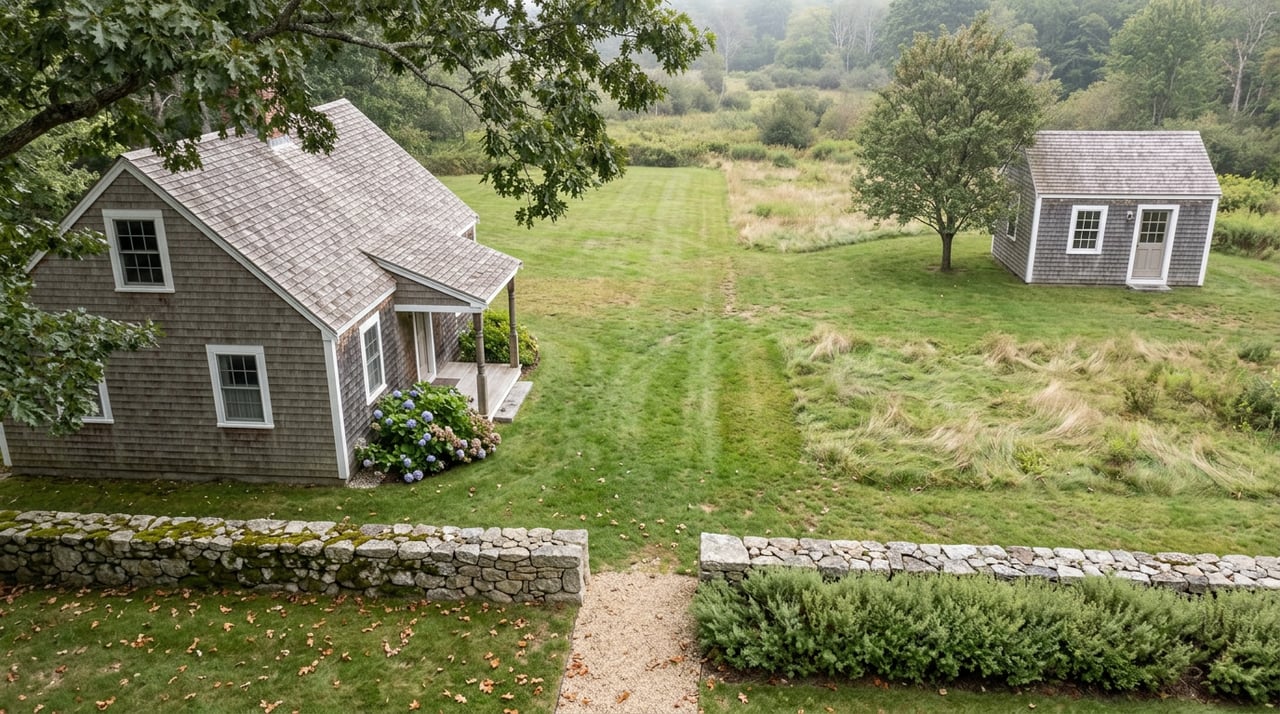
Picture a buyer who spent a weekend touring Chilmark, fell for a shingled compound on three rolling acres with room for a pool house and a real barn, then drove ten minutes into West Tisbury expecting the same math to hold. More land, more house. Except when their agent pulled the parcel's zoning file, the arithmetic broke. The lot had plenty of acreage. The town's own bylaw still capped how much house could sit on it, almost regardless of how many acres came with the deed.
That gap between what an acre promises and what it delivers is the thing most comparisons between these two up-island towns skip past. Everyone talks about price per acre. Almost nobody talks about the rule that decides what you're allowed to build on that acre once you own it.
The Rule That Doesn't Show Up on the Listing Sheet
In April 2022, West Tisbury voters took up a warrant article that had nothing to do with lot lines and everything to do with square footage. The proposal capped the Residential Floor Area of new construction and additions at 3,500 square feet across the first and second floors of the main house. Town meeting approved it 352 to 11, with the article taking effect June 1, 2022, according to reporting at the time by the Martha's Vineyard Times.
The cap sounds tighter than it functions in practice. Guest houses under 1,000 square feet don't count toward the total. Basements can be fully finished, including above-grade windows within limits, and they sit outside the RFA calculation too. Garages, pool houses, workshops, and accessory apartments are excluded as well. Add all of that up on a typical three-acre parcel and you can still land well north of 8,000 square feet of usable space, a point residents raised directly during the town meeting debate over the bylaw.
What the bylaw actually restricts is the size of the single structure most buyers picture first: the main house, the one place where the acreage under it stops mattering once you cross that 3,500-square-foot line. If you want more living space in that main structure, the current zoning bylaw's Supplementary Floor Area section lets you add it, but only by reapportioning some of your base allowance and pairing the increase with what the bylaw calls corresponding acreage. Extra house still costs extra land in West Tisbury. It just doesn't scale in a straight line the way it does in a town where lot size alone determines what gets built.
Chilmark's zoning works on a more familiar lever: minimum lot size drives buildability first, and the acreage itself does more of the work in determining what a parcel can support. That difference in mechanism, not just in median price, is the real story for anyone cross-shopping the two towns.
Why the Vote Landed the Way It Did
The debate at that 2022 town meeting wasn't really about square footage. It was about who a very large, mostly empty house serves. Meeting moderator Dan Waters guided the warrant through 51 articles that night, and the house-size measure drew some of the sharpest public comment of the session. Supporters worried about homes built for a handful of summer weeks that otherwise sit heated and vacant through the winter. Opponents argued that families with legitimate year-round needs shouldn't be penalized for wanting room to spread out.
Both sides were arguing about the same acre from opposite directions. That tension, not a simple cap-versus-no-cap framing, is what a buyer is actually walking into when they shop land in this town.
What an Acre Buys, Town by Town
| West Tisbury | Chilmark | |
|---|---|---|
| Primary zoning lever | Residential Floor Area cap on the main house, largely independent of lot size below the reapportionment threshold | Minimum lot size drives what can be built and subdivided |
| 12-month median sale price (as of spring 2026) | Roughly $1.65 million | Frequently above $2 million |
| Active land and home listings (spring 2026) | Roughly $1.4 million to $7.3 million-plus, depending on acreage and water access | Land parcels priced from under $1 million to well into eight figures for waterfront acreage |
| Per-acre pricing | Trades somewhat below Chilmark on a per-acre and per-bedroom basis | Commands a premium per acre, reflecting more direct acreage-to-buildability |
The per-acre discount in West Tisbury is real, but it isn't free money. Part of what a buyer gives up for that lower per-acre price is the direct line between acreage and house size that Chilmark's system preserves. An extra acre in Chilmark does more of the work toward unlocking a bigger footprint. An extra acre in West Tisbury may do that too, but only through the reapportionment mechanism, and only up to what the corresponding acreage requirement allows.
The Guesthouse Threshold Nobody Mentions Until the P&S
There's a second, narrower rule that catches almost as many buyers off guard as the RFA cap. Under West Tisbury's zoning bylaw, a newly created lot needs 4.5 acres before a guesthouse is permitted on it. This shows up constantly in family-compound planning, where a buyer assumes a two- or three-acre subdivided parcel will support both a main house and a small guest cottage for visiting family. On a lot created after the relevant zoning amendment, that plan needs to clear the 4.5-acre threshold first, regardless of how the main house's own floor area works out.
For anyone comparing a West Tisbury parcel to a similarly sized Chilmark one with compound ambitions, this is worth confirming before any offer goes in, not after.
The Market Context Behind the Comparison
None of this happens in a vacuum. Island-wide, 2025 was a year of quiet acceleration rather than a repeat of the pandemic-era spike. The Vineyard recorded 297 single-family and multi-family home sales in 2025, with a median sale price of roughly $1.7 million and an average price of about $2.6 million, according to reporting by the Vineyard Gazette in January 2026.
The Gazette's coverage also pointed to a detail worth sitting with: the Martha's Vineyard Land Bank, which collects a 2 percent transfer fee on most real estate transactions across the island, tracks its own revenue as what executive director James Lengyel called a reasonably sound barometer of the broader market. Since January 2025, Land Bank revenue rose 22 percent even as the number of transactions fell 12 percent. Fewer deals, more dollars per deal. That's a market where price is doing more of the lifting than volume, which tracks with what's happening at the town level in both West Tisbury and Chilmark.
The same Gazette reporting carried a comment from Lisa Lucier, owner-broker at Anchor Realty, who said that of the houses her firm sold in 2025, only one or two went to year-round Islanders. That's not a West Tisbury or Chilmark-specific data point, but it shapes who a seller in either town is actually marketing to, and it explains why zoning mechanics that most affect a full-time, multi-generation household (like the RFA cap's basement and guesthouse carve-outs) matter more to some buyers than others.
West Tisbury's own 12-month median sits near $1.65 million as of spring 2026, down roughly 7 percent year over year as the mix of what sold shifted toward different property types. That dip in the median says less about softening demand and more about which parcels happened to trade, a reminder that a single town-wide number rarely tells the whole story on an island this small.
What to Ask Before You Write an Offer
A few questions are worth raising with your agent and the town before you get attached to a specific West Tisbury parcel:
Ask what the lot's current buildable Residential Floor Area actually is, since older parcels may carry different allowances depending on when they were created relative to the 2022 bylaw. Ask directly whether a guesthouse is part of the plan, and if so, whether the lot clears the 4.5-acre threshold for newly created parcels. Ask whether any existing structure on the property was grandfathered in above the current cap, since that changes what you can add later. And factor the 2 percent Land Bank fee, paid by the buyer at closing, into your total transaction cost from the start rather than discovering it at the closing table.
A Few Common Questions
Does the floor area cap apply to a house that's already built above 3,500 square feet? Existing structures built before the June 2022 effective date are generally grandfathered. The cap governs new construction and additions going forward, not what's already standing.
Do garages and workshops count toward the limit? No. Garages, pool houses, workshops, and accessory apartments sit outside the Residential Floor Area calculation, which is specific to the main house's living space.
Is Chilmark's zoning simpler because it's just about acreage? It's a different structure rather than a simpler one. Chilmark's system ties buildability more directly to lot size, while West Tisbury separates the acreage question from the floor-area question. Each approach creates its own version of due diligence.
Comparing these two towns on price per acre alone will get you part of the way there. The rest of the picture, what you're actually allowed to build once you own the land, lives in bylaw language that rarely makes it into a listing description. That's the kind of detail we walk through with every up-island buyer at Studio Realty, pairing local zoning knowledge with the design perspective that comes from our partnership with Morgan Studio. If you're weighing a West Tisbury parcel against a Chilmark one, Peyton Wallace and the team are glad to talk through what a specific lot can actually support before you write an offer. Request a private consultation to start that conversation.