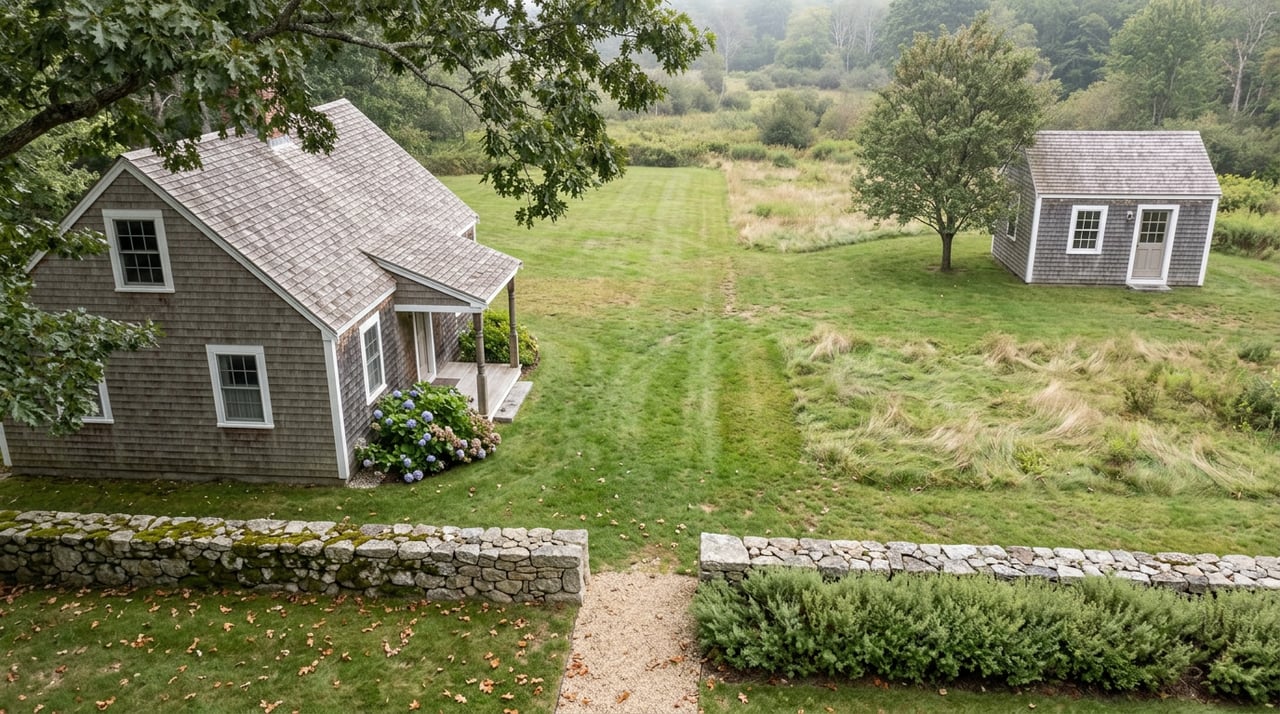
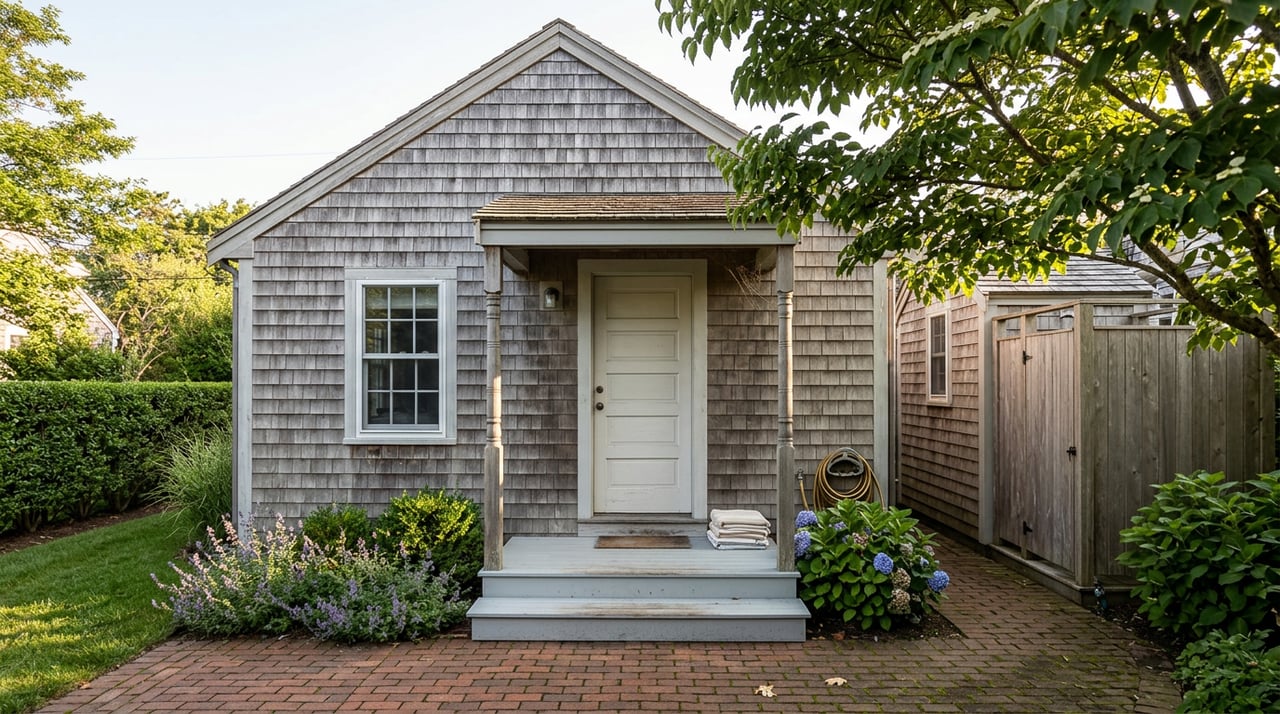
Thinking about building new or taking on a major renovation in Chilmark? It can be exciting to picture the finished home, but in this part of Martha’s Vineyard, the planning process matters just as much as the design itself. If you start with the land, the bylaws, and the site constraints before you fall in love with a concept, you can save time, avoid costly redesigns, and create something that truly belongs here. Let’s dive in.
Why Chilmark planning feels different
Chilmark takes a preservation-first approach to development. The Planning Board states that its mission includes preserving open areas, natural features, rural agricultural character, fishing and shellfishing community, vistas, ponds, forests, and shoreline.
For you as an owner or buyer, that means a new build or large renovation is not just about what fits on paper. It is also about whether the house fits the land, the landscape, and the town’s broader goals.
The town also provides Development Guidelines for subdivision applicants, lot purchasers, architects, and building permit applicants. While those guidelines are not part of the zoning bylaws, they are intended to reduce development impacts and protect Chilmark’s scenic and rural qualities.
That distinction matters. In practice, you should treat the guidelines as part of the early planning conversation, especially if your project involves visible siting decisions, grading, vegetation changes, or a prominent roofline.
Start with zoning before design
Before concept drawings begin, confirm the lot’s zoning district and dimensional rules. Chilmark’s bylaws are conservative, and under Article 4, any use not specifically permitted is prohibited.
That means the first question is not simply, “Can I build?” The better question is, “What can be built here, and how must it be sized and sited to comply?”
Check lot size and setbacks
Current zoning standards vary by district. In most residential districts, the requirement is 3 acres per dwelling with a 50-foot setback.
Other districts have different thresholds:
- District IV: 1.5 acres and 25-foot setback
- District V: 2 acres and 35-foot setback
- Pre-existing lots, Homesite Housing Lots, and Youth Lots of 1.5 acres or less: 25-foot minimum setbacks
These numbers shape the buildable envelope from the start. If your concept ignores them, the redesign process can become expensive very quickly.
Know the height limits
Height is tightly controlled in Chilmark. The bylaw limits:
- Flat, shed, and rounded roofs: 13 feet
- Gabled or hip roofs: 24 feet
- Gabled or hip roofs with special permit: up to 28 feet
That special permit path is not automatic. The Board of Appeals must find that the added height is needed to achieve a form appropriate to Chilmark.
Understand Total Living Area
In Chilmark, Total Living Area, or TLA, is one of the most important sizing rules for residential projects. The bylaw generally measures habitable above-grade space from exterior dimensions.
Decks and porches are excluded, but habitable accessory structures and indoor recreational rooms are included. That means your practical living program may count more broadly than you expect.
For new construction and projects that increase TLA, the baseline cap is 3,500 square feet for 3 acres, adjusted by 250 square feet up or down for each contiguous acre. With a special permit, that cap can increase to 6,000 square feet for 3 acres, also adjusted by acreage.
For additions to buildings that existed on April 22, 2013, the bylaw also provides limited 5% exceptions. If you are renovating an older house, this is one of the first details your team should verify.
Renovations can trigger nonconforming issues
Many Chilmark renovation projects run into nonconforming structure rules. If your proposed work will not meet minimum setbacks, the Zoning Board of Appeals guidance says a special permit under Bylaw 6.6 is required to obtain a building permit, and written consent from the affected abutter is required.
If the project alters a pre-existing nonconforming structure, Bylaw 8.3 may also apply. If the work moves the structure closer to a lot line, both bylaws may be required.
The town’s guidance defines a pre-existing nonconforming structure as one built before January 15, 1973. For older homes, that date can have a major effect on the path forward.
Older homes need extra review
Historic houses can add another layer of planning. The TLA bylaw allows only narrow exclusions for Historic Houses, and if those exclusions are used, the bylaw requires special permit review for exterior changes and input from the Historical Commission.
If you are hoping to preserve an older structure while adding modern function, it is wise to study these rules before finalizing the design brief. Early clarity can help you balance preservation goals with practical space needs.
ADUs and guest-house planning are limited
If your plan includes a separate apartment or guest-house style unit, be careful not to assume flexibility. Chilmark’s Protected Use ADU rules cap the unit at 900 square feet of Gross Floor Area and generally allow only one per lot.
The bylaw also prohibits short-term rental use for a Protected Use ADU, except for a narrow grandfathered guest-house situation. If your vision includes guest accommodations, staff space, or a flexible detached structure, these rules should be reviewed at the outset.
Overlay districts can change the process
Overlay districts matter early, not late. Article 11 identifies several designated areas, including the:
- Coastal District
- Streams and Wetlands Draining into Coastal Great Ponds
- Roadside District
- Special Places District
- Meetinghouse Road and Tiasquam River District
The intent of these districts includes preserving public views, fitting new construction into the landscape, avoiding pollution and water-supply burdens, limiting traffic impacts, and preventing deterioration of rural character.
If your property falls within one of these areas, the design process may need added coordination. The Site Review Committee says it reviews projects in Districts of Critical Planning Concern or local overlay districts and may refer applicants to the Board of Health, Board of Appeals, Conservation Commission, Historical Commission, and Squibnocket Pond District Advisory Committee.
Siting should follow the landscape
Chilmark’s planning framework consistently points toward a landscape-first approach. The town’s Development Guidelines recommend preserving open space, scenic points, watercourses, large trees, historic spots, woodlands, and trails.
They also recommend avoiding wetland disturbance, minimizing lawns and recreational facilities, using native species, retaining natural vegetation on slopes, minimizing grading, curving roads to fit the land, retaining buffers, and using shared driveway entrances where possible.
For your project, that means the best design work often starts outside the house. A thoughtful site walk can be as important as the floor plan.
What boards look for
For special permit work, the Board of Appeals looks for plans showing that site preparation and building location will preserve and enhance trees, exposed boulders, watercourses, hills, vistas, water views, and historic locations. The goal is also to minimize intrusion into the character of existing development.
In overlay districts, the bylaws further emphasize causing as little interruption of public views as possible and keeping new construction in harmony with the landscape type. That is why view corridors, driveway alignment, grading, vegetation, and roof profile should all be studied before schematic design becomes too fixed.
Septic, wetlands, and permitting need early attention
The Building Inspection and Zoning Enforcement office enforces both the State Building Code and Chilmark’s zoning bylaws. The Site Review Committee advises applicants to begin by contacting the Building Department, which will refer the project to Site Review if necessary.
Septic planning is another early priority. Chilmark’s Board of Health issues septic permits, and the Massachusetts Department of Environmental Protection states that for new septic construction or upgrades, the local Board of Health is the primary regulatory authority. MassDEP also states that the first step for new construction is to contact both the local Board of Health and the Building Department.
Wetlands and coastal resource areas can add separate review as well. Chilmark’s Conservation Commission administers the Massachusetts Wetlands Protection Act and local wetlands bylaws covering wetlands, coastal banks, beaches, tidal flats, salt marshes, and streams.
The Commission also notes that unresolved Orders of Conditions should be closed out with a Certificate of Compliance, and filing that certificate at the Dukes County Registry of Deeds can affect later real estate transactions. If you are buying a property for renovation, this is worth checking during due diligence.
Some projects may face regional review
Depending on scale and location, a proposal may also qualify as a Development of Regional Impact, or DRI, under Martha’s Vineyard Commission rules. The MVC is the regional planning agency for Dukes County.
Its DRI process includes referral, application, public hearing, deliberation and decision, and then action by the town. Not every project will go through this process, but larger or more sensitive proposals should consider the possibility early.
A practical way to plan your project
In Chilmark, it is often smarter to do a feasibility study before you commit to a final architectural concept. The town’s rules make clear that buildable area, TLA, overlays, septic, wetlands, and nonconforming status can all shape the design.
A practical early team often includes an architect, builder, surveyor, and septic designer working from a current survey and a site walk. The sequence is straightforward: determine the real buildable envelope first, then design to it.
That approach tends to produce better outcomes in Chilmark. It also helps create homes that feel grounded in the land rather than imposed on it.
Why this matters for buyers and owners
If you are buying land or an older home in Chilmark, the right question is not only whether the property is beautiful today. It is whether your future plans can be executed within the town’s rules and review process.
If you already own property, careful pre-planning can protect both timeline and budget. In a town that rewards low-profile, landscape-aware design, early discipline usually leads to a smoother path.
At Studio Realty, we believe the strongest Chilmark projects begin with respect for place, thoughtful feasibility, and a clear understanding of how design and regulation work together. If you are weighing a purchase, renovation, or build opportunity, Studio Realty LLC can help you evaluate the property through a design-aware, stewardship-focused lens.
FAQs
What should you check first before planning a new build in Chilmark?
- Confirm the lot’s zoning district, minimum lot size, setbacks, height limits, TLA limits, and whether the property falls within an overlay district.
How much living space can you build in Chilmark?
- For new construction and projects increasing TLA, the baseline limit is 3,500 square feet for 3 acres, adjusted by 250 square feet up or down for each contiguous acre, with a possible special permit increase up to 6,000 square feet for 3 acres, also adjusted by acreage.
Do older homes in Chilmark have different renovation rules?
- Yes. If a structure is pre-existing nonconforming, special permit review may be required under Bylaws 6.6, 8.3, or both, depending on the work proposed.
Can you add an ADU or guest-house style unit in Chilmark?
- The Protected Use ADU rules generally allow one per lot, cap it at 900 square feet of Gross Floor Area, and prohibit short-term rental use except for a narrow grandfathered guest-house situation.
When should you involve Chilmark septic and wetlands officials?
- Early in the process. The town advises starting with the Building Department, and septic planning should also begin with the local Board of Health. Wetlands and coastal resource areas may require Conservation Commission review.
Could a Chilmark project require Martha’s Vineyard Commission review?
- Yes. Depending on a project’s scale and location, it may be referred as a Development of Regional Impact through the Martha’s Vineyard Commission process.